
Waren-Nr.: 3519968
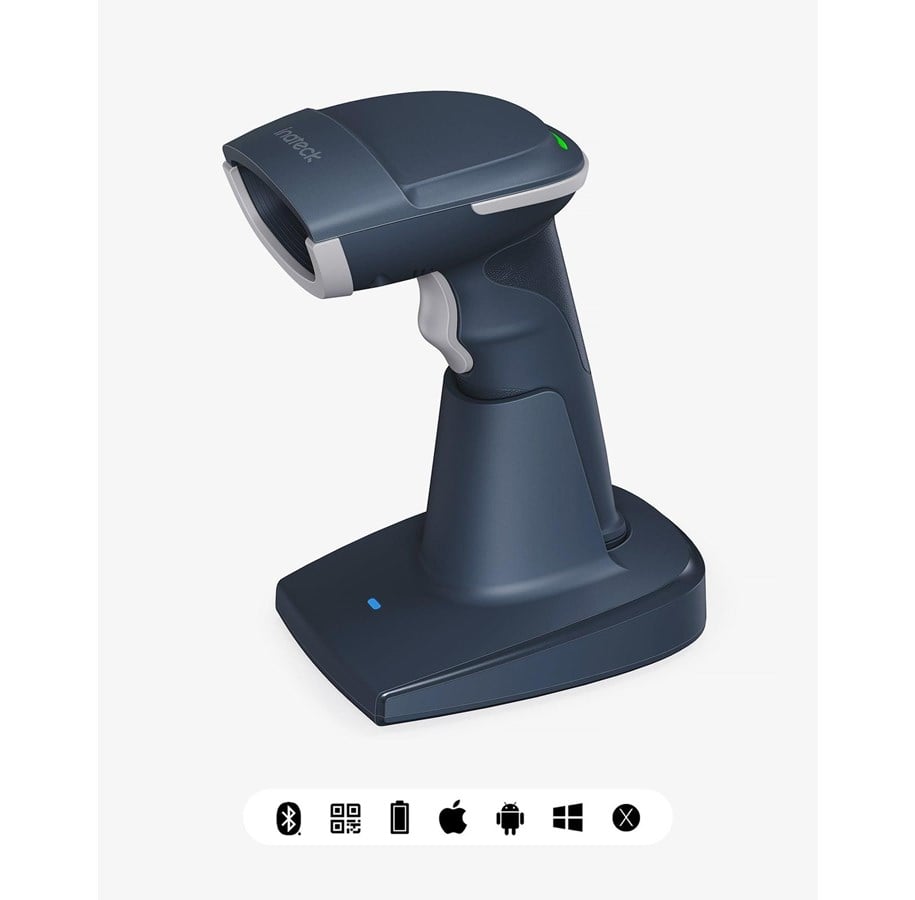
Inateck BCST-54
Inateck BCST-54 Tragbares Barcodelesegerät 1D/2D CMOS Blau, Grau
117,84 €
99,03 € exkl. MwSt.
Günstigste Versandoption 4,99 €
Bestellware - 8-10 Tage Lieferzeit
1D/2D Barcode Supported: Easy to read mainstream 2D barcodes and all 1D barcodes including those with unintended abrasions or surface stains.
Screen Scanning: Equipped with CMOS sensors, BCST-54 can read barcodes off sceens.
Smart Base: This can be connected with a computer via the USB cable provided to recharge the scanner or transmit barcode data to the computer.
3 Connection Methods: Connected with a computer via the included USB cable for plug and play(no configuration required); connected via the smart base for wireless mode(paired by default); connected via Bluetooth to work with mobile phones, tablets, etc(manual configuration required).
More Functions: Vibrate mode, inventory mode(capable of saving over 270,000 barcodes in buffer) and more to meet your various needs.
Screen Scanning: Equipped with CMOS sensors, BCST-54 can read barcodes off sceens.
Smart Base: This can be connected with a computer via the USB cable provided to recharge the scanner or transmit barcode data to the computer.
3 Connection Methods: Connected with a computer via the included USB cable for plug and play(no configuration required); connected via the smart base for wireless mode(paired by default); connected via Bluetooth to work with mobile phones, tablets, etc(manual configuration required).
More Functions: Vibrate mode, inventory mode(capable of saving over 270,000 barcodes in buffer) and more to meet your various needs.
Hersteller
Waren-Nr.
3519968
Modell
BCST-54_blue
EAN
6976521119931
Zum Hersteller:
Typ
Tragbares Barcodelesegerät
Scanner-Typ
1D/2D
Sensor-Typ
CMOS
Lineare (1D) Barcodes unterstützt
Codabar, Code 11, Code 128, Code 39 (ASCII), Code 93, EAN-13, EAN-8, GS1 Composite, GS1 DataBar, GS1 DataBar Expanded, GS1 Databar Limited, GS1-128 (UCC/EAN-128), IATA, ISBN, ISSN, Industrial 2 of 5, Interleaved 2 of 5, MSI, Matrix 2 of 5, Standard 2 of 5, UPC-A, UPC-E
2D (Matrix & gestapelte) Barcodes unterstützt
Aztec Code, Datenmatrix, MaxiCode, PDF417, QR Code
Auslösemodus
Auto-Induktion, Manuell
Optische Sensorauflösung (B x H)
640 x 480 Pixel
Neigungslesewinkel
55 - 55°
Maximum scanweite
40 cm
Schärfentiefebereich
30 cm
Übertragungstechnik
Verkabelt & Kabellos
Standard-Schnittstellen
Bluetooth, USB
Bluetooth
Ja
Produktfarbe
Blau, Grau
Gehäusematerial
Acrylnitril-Butadien-Styrol (ABS), Polycarbonat (PC), Thermoplastisches Urethan (TPU)
LED-Anzeigen
Ja
Alarm
Ja
Vibrationsfunktion
Ja
Energiequelle
Batterie, USB
Eingangsspannung
5 V
Gewicht
166 g
Breite
90,9 mm
Tiefe
68,3 mm
Höhe
165,1 mm
Mitgelieferte Kabel
USB
Ladestation
Ja
Betriebstemperatur
0 - 50 °C
Akku-/Batteriekapazität
2600 mAh
Kompatible Betriebssysteme
iOS and Android, Windows 11/10/8.1/8/7/Vista/XP/CE, Mac OS X, Linux, Unix, RASPBERRY PI and Chrome OS
Scannen
Typ
Tragbares Barcodelesegerät
Scanner-Typ
1D/2D
Sensor-Typ
CMOS
Lineare (1D) Barcodes unterstützt
Codabar, Code 11, Code 128, Code 39 (ASCII), Code 93, EAN-13, EAN-8, GS1 Composite, GS1 DataBar, GS1 DataBar Expanded, GS1 Databar Limited, GS1-128 (UCC/EAN-128), IATA, ISBN, ISSN, Industrial 2 of 5, Interleaved 2 of 5, MSI, Matrix 2 of 5, Standard 2 of 5, UPC-A, UPC-E
2D (Matrix & gestapelte) Barcodes unterstützt
Aztec Code, Datenmatrix, MaxiCode, PDF417, QR Code
Auslösemodus
Auto-Induktion, Manuell
Optische Sensorauflösung (B x H)
640 x 480 Pixel
Neigungslesewinkel
55 - 55°
Maximum scanweite
40 cm
Schärfentiefebereich
30 cm
Anschlüsse und Schnittstellen
Übertragungstechnik
Verkabelt & Kabellos
Standard-Schnittstellen
Bluetooth, USB
Bluetooth
Ja
Leistungen
Produktfarbe
Blau, Grau
Gehäusematerial
Acrylnitril-Butadien-Styrol (ABS), Polycarbonat (PC), Thermoplastisches Urethan (TPU)
LED-Anzeigen
Ja
Alarm
Ja
Vibrationsfunktion
Ja
Energie
Energiequelle
Batterie, USB
Eingangsspannung
5 V
Gewicht und Abmessungen
Gewicht
166 g
Breite
90,9 mm
Tiefe
68,3 mm
Höhe
165,1 mm
Verpackungsdaten
Mitgelieferte Kabel
USB
Ladestation
Ja
Betriebsbedingungen
Betriebstemperatur
0 - 50 °C
Akku/Batterie
Akku-/Batteriekapazität
2600 mAh
Sonstige Funktionen
Kompatible Betriebssysteme
iOS and Android, Windows 11/10/8.1/8/7/Vista/XP/CE, Mac OS X, Linux, Unix, RASPBERRY PI and Chrome OS
Die genannten Informationen und Spezifikationen können vom Hersteller jederzeit und ohne vorherige Ankündigung geändert werden. Die Herstellerabbildungen dienen ausschließlich der Veranschaulichung. Irrtümer und Schreibfehler bleiben vorbehalten. Deutsche Bedienungsanleitungen sind in einigen Fällen ausschließlich digital verfügbar und nicht Bestandteil des Lieferumfangs. Teile des Textes wurden möglicherweise automatisiert erstellt oder maschinell übersetzt und können daher in Einzelfällen missverständlich sein.